

Compliance with the NewCompetition Framework
Implementation of Combined State Aid and Public Procurement. A 3-day immersion in Freiburg on the simultaneous reform of GBER and the EU Public Procurement Directive — and the legal overlap no one is preparing for.
Two regimes reforming at once — and they apply to the same projects
The Commission is rewriting both rulebooks in parallel. The era of mechanical lowest-price awards is over — and the de minimis safety net is shrinking. Managing one regime without the other is no longer enough.
Higher thresholds, expanded green and digital categories, but tighter compliance and reporting. The de minimis safety net is shrinking.
MEAT becomes the default. Strategic award criteria — sustainability, resilience, EU content — replace the mechanical lowest-price logic of 2014/2021.
A below-market contract can be both a procurement irregularity and unlawful State aid. GBER-exempt grants funding public works trigger both regimes simultaneously.
For practitioners implementing both regimes in parallel
Contracting authorities, central buyers, framework agreement managers.
In-house counsel and private practice handling EU competition matters.
EU-funded projects, managing authorities and intermediate bodies.
Legal and policy advisors designing aid schemes and tenders.
Recipients of GBER-exempt schemes that subsequently run tenders.
Audit authorities, internal controllers, performance reviewers.
Led by senior State Aid, Competition & EU Funds authorities

Lead Expert
Dr. Hans Arno Petzold
State Aid and Competition Law Expert
- Doctor of Law — Europa-Kolleg / Hamburg University
- Head of Unit, Ministry of Agriculture, Rural Areas, Europe, and Consumer Protection (State of Schleswig-Holstein, Germany)
- Author of multiple publications on European Law and State aid
- Decades of practice on GBER, SGEI and the State aid / procurement interface
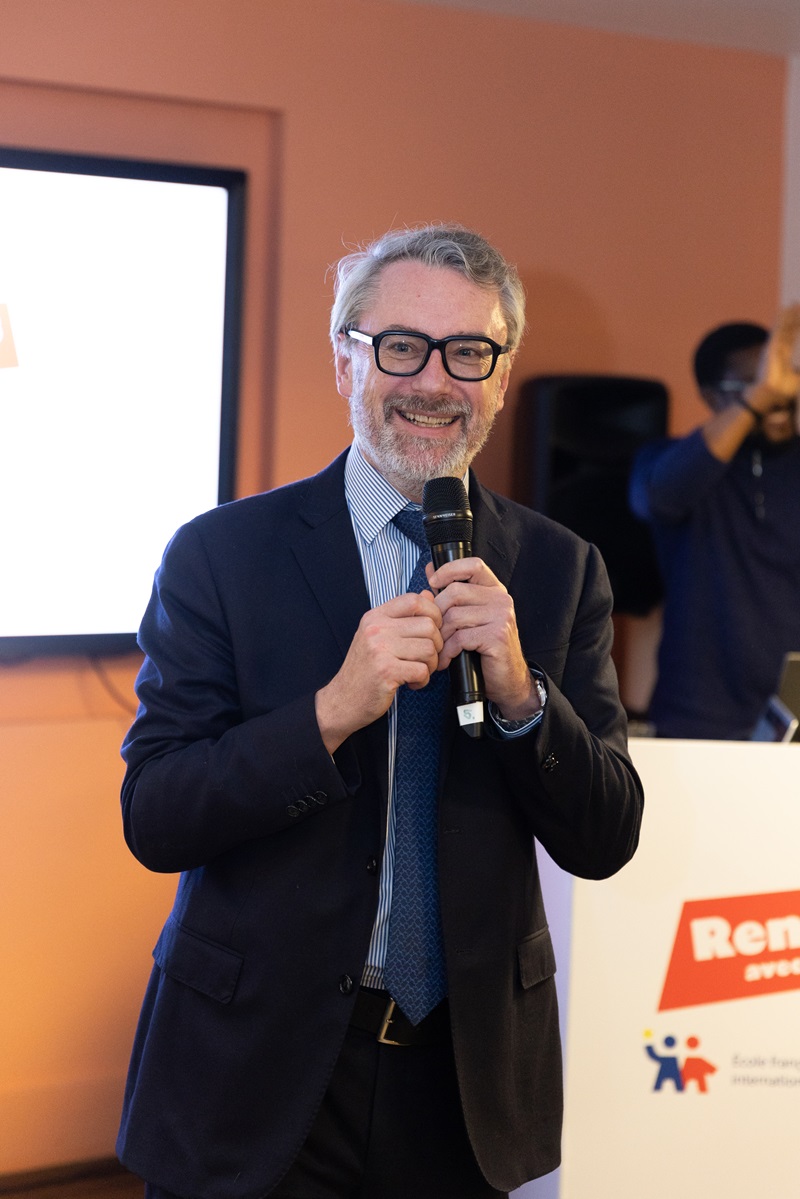
Co-Expert
Franck Sottou
EU Funds & Performance Management Expert
- CEO & Founder of ETCP — Paris, with an antenna in Zagreb
- 27+ years in EU funds management and intervention logics
- 32+ years in monitoring, evaluation and KPI systems
- Expert in risk management and results-oriented management
Three days, six lessons, twenty real cases
Each lesson combines learning objectives, structured content, real ECA-grade case studies and an interactive role play or workshop. Mornings 9:00–12:30, afternoons 14:00–17:00.
Fundamentals and Common Pitfalls
Morning Session · 9:00–12:30
Lesson 1 — Key Errors and Irregularities / ECA Findings
Learning Objectives
- Identify the most frequent errors in State aid and Public procurement implementation
- Understand ECA (European Court of Auditors) findings and their implications
- Recognize red flags in project implementation
Content
- Overview of ECA special reports on State aid and Public procurement errors
- Analysis of common irregularities: incorrect legal basis, failure to notify, inadequate needs assessment, artificial splitting of contracts
- Statistical breakdown of error rates by sector and Member State
- Financial corrections and recovery procedures
Real Cases
- Case Study 1 — Local infrastructure investment incorrectly assessed as non-State aid
- Case Study 2 — Direct award instead of competitive procedure for IT services contract
- Case Study 3 — Broadband network development with cumulative aid issues
Interactive Exercise
Role Play — Participants act as auditors reviewing a municipal public works project with multiple compliance issues. Groups identify irregularities and propose corrective measures.
Afternoon Session · 14:00–17:00
Lesson 2 — Key Elements of Reform
Learning Objectives
- Master the updated State aid rules (GBER amendments, Climate, Energy and Environmental Aid Guidelines)
- Understand the new Public Procurement Directives' flexibility mechanisms
- Apply proportionality principles in both frameworks
Content
- GBER 2024 amendments: increased thresholds, simplified notifications, green transition provisions
- Public Procurement modernization: reserved contracts, innovation partnerships, light regime for social services
- Digital reporting obligations and transparency requirements
- Sustainability and green procurement integration
Real Cases
- Case Study 4 — Renewable energy project utilizing revised GBER thresholds
- Case Study 5 — Innovation partnership for smart city solutions
- Case Study 6 — Social housing project combining multiple State aid exemptions
Interactive Exercise
Workshop — Design a procurement strategy for an electric bus fleet acquisition that maximizes GBER benefits while ensuring competitive procedure compliance.
Complex Interactions and Practical Tools
Morning Session · 9:00–12:30
Lesson 3 — State Aid and Public Procurement Combined Cases
Learning Objectives
- Navigate the intersection between State aid and Public procurement rules
- Identify when procurement procedures affect State aid assessment
- Apply the Market Economy Operator Principle (MEOP)
Content
- When does public procurement trigger State aid concerns?
- MEOP test: adequate remuneration and risk transfer
- Concessions vs. public service contracts vs. State aid
- In-house providing and State aid implications (Teckal criteria)
- SGEI compensation and procurement exemptions
Real Cases
- Case Study 7 — Public hospital outsourcing catering services with overcompensation issues
- Case Study 8 — Municipal waste management concession with guaranteed minimum revenue
- Case Study 9 — Public transport SGEI with infrastructure investment component
- Case Study 10 — PPP agreement for university residence halls
Interactive Exercise
Role Play — Negotiation simulation between a regional authority and a private operator for a cultural venue management contract. Teams balance procurement requirements with State aid compliance, calculating MEOP-compliant compensation.
Afternoon Session · 14:00–17:00
Lesson 4 — De Minimis, SCO/FNLC and State Aid
Learning Objectives
- Apply de minimis regulation strategically
- Utilize Simplified Cost Options (SCO) and Financing Not Linked to Costs (FNLC)
- Understand State aid implications of different funding methodologies
Content
- De minimis regulation: thresholds, monitoring, cumulation rules
- SCO types: unit costs, lump sums, flat rates – State aid considerations
- FNLC under Cohesion Policy: results-based financing and State aid
- Documentation requirements and audit trails
- SGEI de minimis vs. general de minimis
Real Cases
- Case Study 11 — SME support program using general de minimis across multiple years
- Case Study 12 — ESF+ training program with unit costs and potential State aid to training providers
- Case Study 13 — ERDF entrepreneurship grant with lump sum payments
- Case Study 14 — Agricultural de minimis for small-scale farmers' cooperative
Interactive Exercise
Practical Workshop — Participants receive profiles of 5 different beneficiaries with various historical aid amounts. They calculate remaining de minimis room, identify cumulation issues, and design compliant funding packages using appropriate SCO methodologies.
Risk Management and Continuous Improvement
Morning Session · 9:00–12:30
Lesson 5 — Risk Management and Sampling Strategies
Learning Objectives
- Develop risk-based verification approaches
- Design effective sampling methodologies
- Implement preventive control systems
Content
- Risk assessment matrix: likelihood vs. impact for State aid and procurement errors
- Risk factors: beneficiary profiles, operation types, financial thresholds
- Sampling strategies: statistical, targeted, complementary samples
- Representative vs. non-representative sampling for error rate extrapolation
- Preventive vs. detective controls: ex-ante verification procedures
- Using management declarations and control checklists effectively
Real Cases
- Case Study 15 — Regional operational program with high error rate requiring enhanced controls
- Case Study 16 — Targeted sample revealing systemic procurement splitting issue
- Case Study 17 — Implementation of preventive legal screening for State aid notifications
Interactive Exercise
Group Workshop — Teams receive a portfolio of 50 operations with various risk indicators. They design a sampling strategy (size, methodology, justification), select operations for verification, and propose risk mitigation measures for high-risk categories.
Afternoon Session · 14:00–16:30
Lesson 6 — Improving Checklists and Verification Tools
Learning Objectives
- Critique and enhance existing verification checklists
- Tailor control tools to specific risk profiles
- Develop practical guidance for frontline staff
Content
- Anatomy of effective checklists: clear questions, objective criteria, proportionality
- Common weaknesses: overly generic questions, lack of legal references, inadequate evidence requirements
- Adapting checklists to operation typologies and risk levels
- Digital tools and databases for verification support
- Training verifiers: consistency, professional judgment, documentation standards
- Feedback loops: learning from past errors to improve future controls
Real Cases
- Case Study 18 — Checklist failure that missed significant State aid issue in infrastructure project
- Case Study 19 — Overly burdensome verification causing delays and beneficiary complaints
- Case Study 20 — Best practice example of risk-proportionate, user-friendly verification system
Interactive Exercise
Practical Workshop — Participants receive a generic State aid/procurement checklist currently in use. In small groups they identify weaknesses, redundancies and gaps, then redesign the checklist for a specific operation type (business grants, construction works, service contracts, SGEI compensation), presenting their improved version with justification.
Final Session · 16:30–17:00
Wrap-up & Certification
Content
- Q&A and seminar wrap-up
- Evaluation and feedback collection
- Distribution of resource materials and contact information for ongoing support
- Certification of Qualification
Participant Materials
- Comprehensive seminar handbook with legal references, case studies and templates
- Access to online resource library with updated regulations and guidance documents
- Certificate of completion and qualification
Freiburg — Europe's Green Capital at the edge of the Black Forest
Hosting this seminar in Freiburg is a deliberate choice. Recognised as one of the world's most sustainable cities — and a long-standing model for European environmental policy — Freiburg embodies the very logic of the new Competition Framework: aligning public spending with green, social and resilience priorities.
With its solar-powered Vauban district, car-light city centre, medieval Münster, and 600,000 m² of pedestrian streets crossed by the iconic Bächle water channels, Freiburg offers the rare combination of an inspiring backdrop and a world-class living laboratory of sustainable public policy.
European Green City
European Sustainable City Award winner. Reference model for EU-funded green urban policy.
Solar capital of Germany
Among the highest hours of sunshine in Germany; pioneer of solar architecture.
Gateway to the Black Forest
Wooded hills minutes from the old town — perfect for early-morning walks.
Car-light city
500+ km of cycle paths, walkable historic core. Almost everything reachable on foot.
Stadthotel Freiburg
Central venue, walking distance to the Münster, Augustinerplatz and the historic Bächle quarter.
Stadthotel Freiburg — central, walking distance to the Münster and old town.
Basel EuroAirport (EAP) ~70 min by direct shuttle. Frankfurt & Zurich also reachable.
Freiburg Hbf on the Frankfurt–Basel high-speed line. Direct ICE/TGV from Paris, Frankfurt, Zurich.
3 immersive days · max 24 participants · attendance & qualification certificate · working language English.
Join us in Freiburg this June
Standard fee includes 3 days of training, all materials, lunches and refreshments, networking dinner in Freiburg old town, and certificate of attendance. Travel and accommodation not included — preferred hotel rates available at Stadthotel Freiburg.
Full price
€1,435.00
individual seat
Group rate (2+)
€1,291.50
per participant
Early bird
€1,219.75
2 months before
Large groups (5+)
Special rates
on request
- Complete materials & contract templates
- Lunches & refreshments included
- Networking events
- Attendance & qualification certificate
- 12-month online resource access
- Preferential hotel rate at Stadthotel Freiburg
All enquiries: contact@etcp.fr